
Thornford
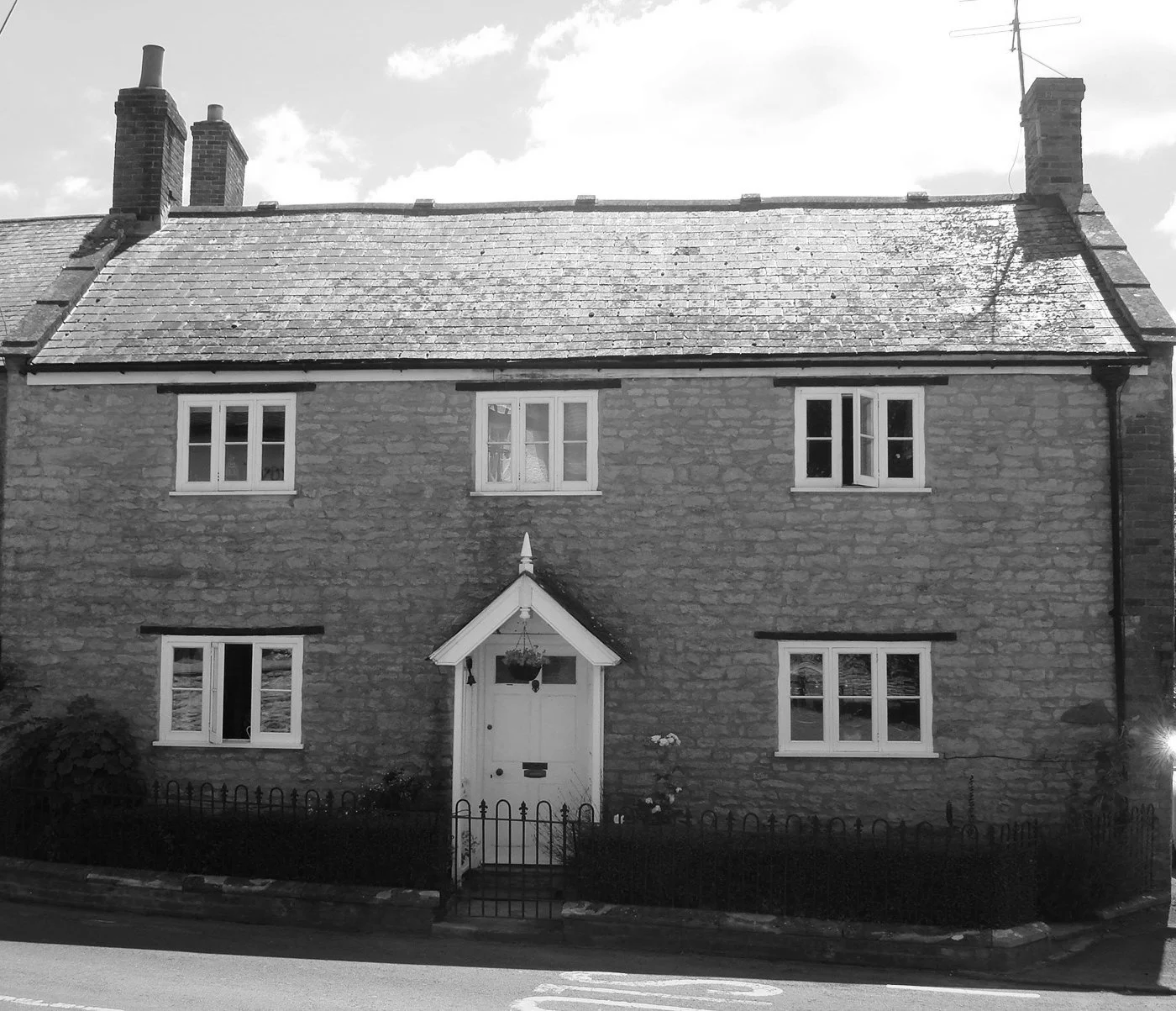
Homelea is a mid 19th century detached house occupying a prominent position in the Thornford Conservation Area.
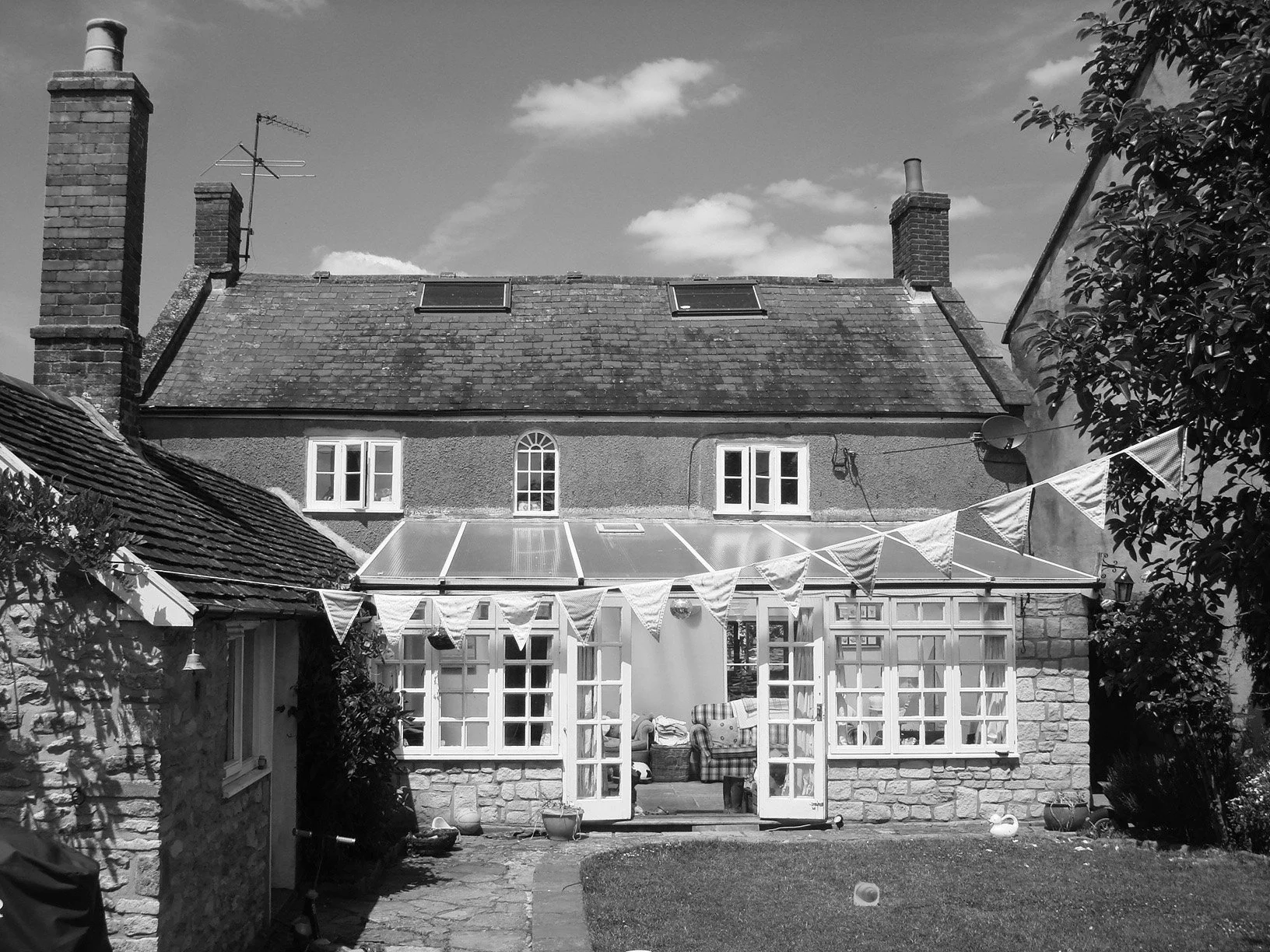
The room sizes are typically cottage, so small by today’s standard. The kitchen was particularly meagre, and had to accommodate the dining table as well as cooking and preparation spaces.
The house is home to a family of five, and whilst it was perfect for small children, it was not going to remain that way for long.
Client Brief
The phrase ‘fit a quart into a pint pot’ was how the brief could have been worded, with the kitchen the pint pot and family as the quart - and a bit. More cooking and dining space were the two key requirements, with room for a sofa and a comfy chair or two if budget allowed.
Design
The budget was modest so keeping things simple was the best way of making sure it stretched. Apart from budget considerations, there were also the restrictions imposed on the site by the village’s Conservation Area in which it sits.
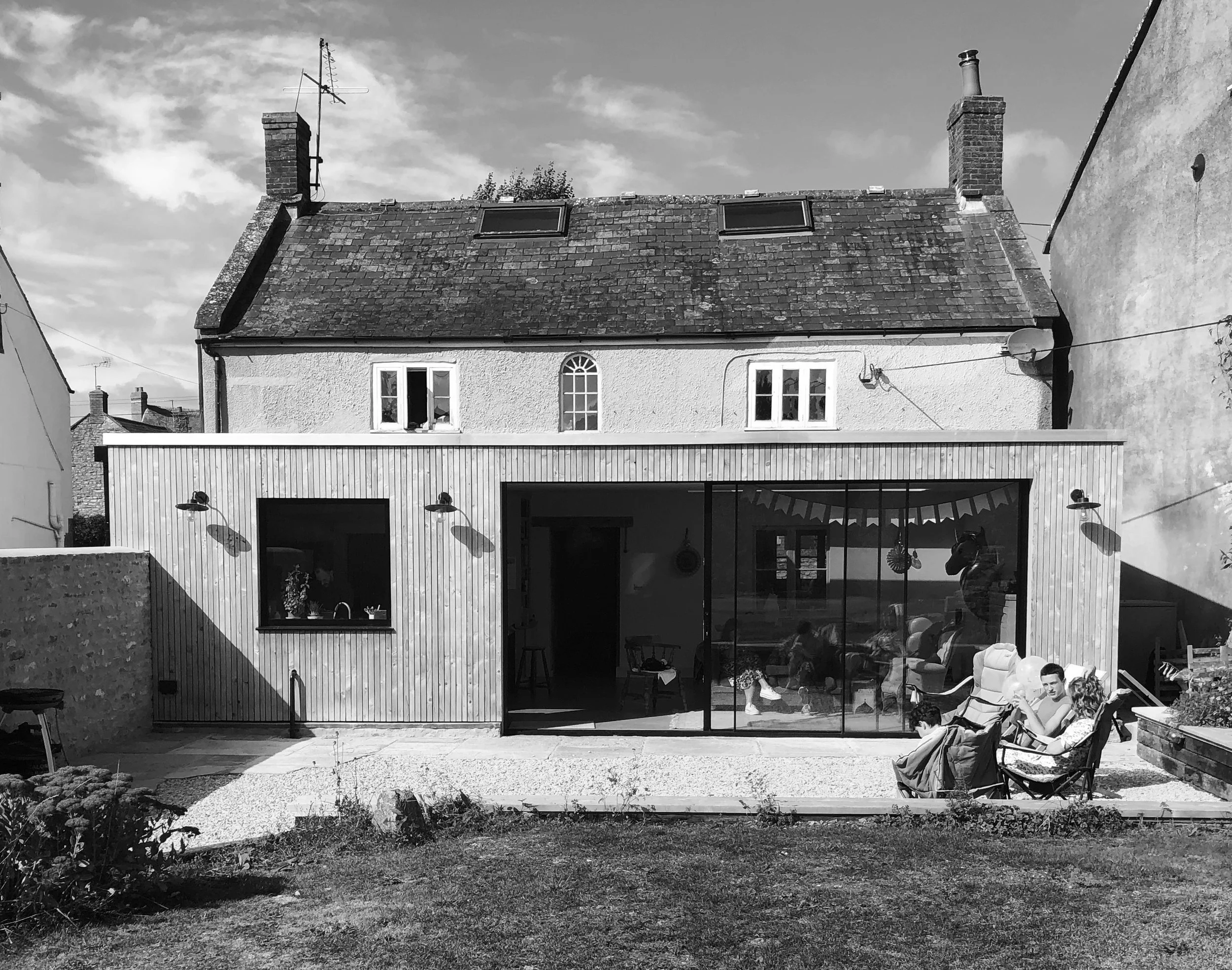
A neat, single storey, timber-framed structure extending the full width of the house was the preferred solution. The stone making up the external walls of the existing outbuilding was salvaged during demolition and used to clad part of the extension; vertical timber cladding making up the remaining.
Floor to ceiling sliding doors with slim aluminium frames fill the extension with light and make the most of the view down the garden. The stone work was continued south beyond the extension to provide privacy to the terrace.
Where do you start?
The first question should always be, ‘Can I reorganise?’. Changing the way you use existing spaces is always the most sustainable solution. If that isn’t possible, then adapting them is the next option to consider.
An existing stone outbuilding to the rear of the house formed a boundary between Homelea and its neighbour to the west. Most likely as old as the house, and rather quaint, but spoilt by a lean to extension of poor construction and dubious structural integrity.
The adaptation and reuse of the existing outbuilding, although seriously considered as a solution, was not feasible, the complexity of the practicalities of adaptation rendering this option beyond economic viability; there were just too many hurdles, not least the old, and very deep well immediately adjacent to the external wall to the west.
Sadly, this left the only feasible solution: demolition of the outbuilding and construction of a new rear extension.